Paper Bag Price in India — GSM, Size, Handle aur Printing ka Kya Asar Padta Hai
KD & Co.

Connect With KD & Co. For Reliable Paper Bag & Packaging Solutions Today.
Shed No. 3, Plot No. 4, CMS Compound, Anangpur Village, Faridabad, India - 121003
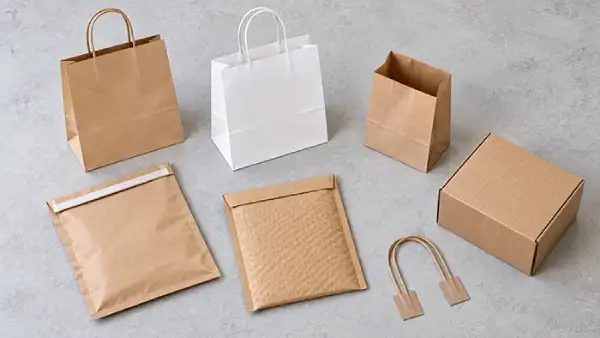
You see paper bags everywhere these days — retail counters, food stalls, gifting boxes too. There's a reason for that. They balance sustainability with branding value in a way plastic can't touch anymore, and since most are made from kraft paper, they're biodegradable, recyclable, strong enough to actually hold weight. That's the whole draw.
But here's the thing. Ask three different paper bags manufacturer contacts for a quote and you'll get three different numbers. Not a little different — sometimes wildly different. And no, it isn't random pricing. It comes down to a handful of factors you can actually measure: paper thickness, size, handle type, how much printing goes on. This guide breaks each one down, so by the time you're asking for a quote, you already know what drives paper bag price in india instead of guessing at it.
A paper bags supplier never hands you one flat number. Can't, really — too many moving parts. Every rate card stacks a set of variables on top of each other, and four of them do most of the heavy lifting.
DID YOU KNOW? “Paper bags were first patented in the United States way back in 1852 — decades before plastic bags even existed. One of the oldest packaging formats still in commercial use today, if you think about it.”
GSM and size work together when a kraft paper bag manufacturer builds a quotation, not separately. Sounds odd, but a small bag in high GSM can sometimes cost close to what a large bag in lower GSM costs. Why? Because raw material weight is what gets billed, not the visible footprint. Here's how buyers usually work through this trade-off:
Skip this step, and you'll likely over-order strength you didn't need. That inflates the final paper bag rate per piece for no real benefit.
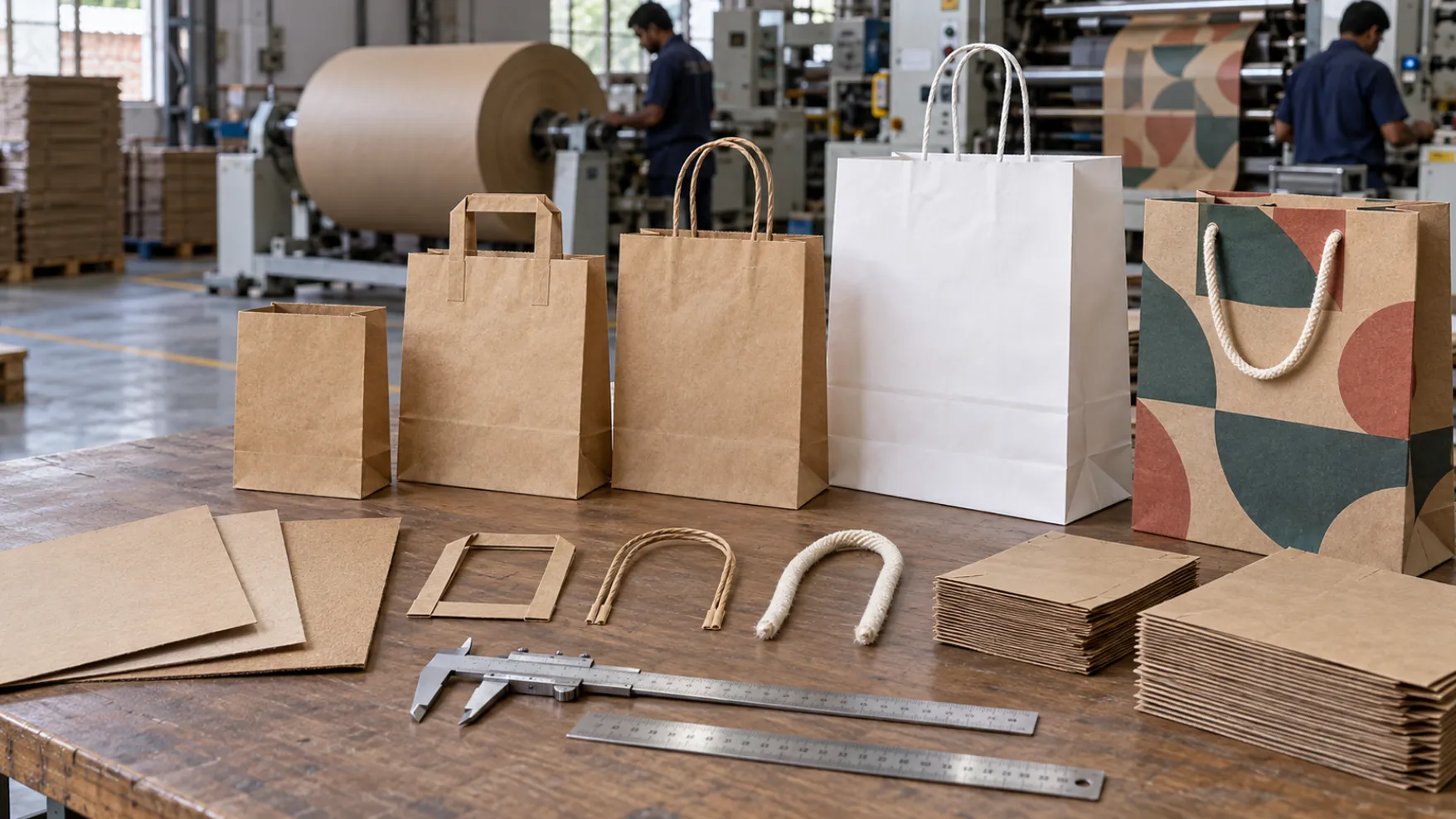
Handles seem like a minor detail. They're not. They shift cost and perceived quality more than most buyers expect. Paper bag handle types fall into a few broad buckets, and each one changes labour time, material use, finishing complexity — sometimes all three at once.
Here's a general comparison of how these handle styles typically sit in the market. Not tied to any specific rate — just a broad reference while you're weighing options.
|
Handle Type |
Typical Look & Feel |
Common Industry Use |
Production Complexity |
|
Twisted Handle |
Casual, sturdy |
Grocery, retail carry bags |
Low |
|
Flat Handle |
Neat, structured |
Boutique and apparel packaging |
Medium |
|
Die-Cut Handle |
Minimal, no attachment |
Quick-service food, courier |
Low |
|
Rope/Cotton Handle |
Premium, gift-oriented |
Gifting, jewellery, cosmetics |
High |
This is where a custom paper bag printing order can drift furthest from the plain, unprinted rate. It comes down to how many colours you're using, how much of the bag gets covered, and which method the printer runs — screen, offset, or digital.
TRIVIA: “Screen printing actually holds sharper, more solid ink coverage than digital printing at high volumes. That's exactly why a lot of bulk retail orders still stick with it.”
Buyers working with a kraft paper bag manufacturer should sort out artwork-readiness early too. Print-ready files cut the back-and-forth, and that keeps both cost and turnaround predictable.
The paper bag rate per piece isn't some number pulled off a shelf. It's the sum of GSM, size, handle type, printing, and order volume, all layered together. Keep these in mind while comparing quotes:
FACT: “Paper degrades naturally within a few weeks under normal composting conditions. Plastic carry bags? Centuries. Not even close.”
Cost-effective doesn't mean cheapest. It means matching the spec to the actual use, nothing over-engineered. A structured approach helps here:
Follow this sequence, and the per-piece rate usually comes down — without touching strength or print quality.
Tell us your size, GSM, quantity and other requirements. Our team will help you take the order from specification to dispatch.