India me Plastic Ban Rules — Retailers aur Restaurants ko kya switch karna hai
KD & Co.


Connect With KD & Co. For Reliable Paper Bag & Packaging Solutions Today.
Shed No. 3, Plot No. 4, CMS Compound, Anangpur Village, Faridabad, India - 121003
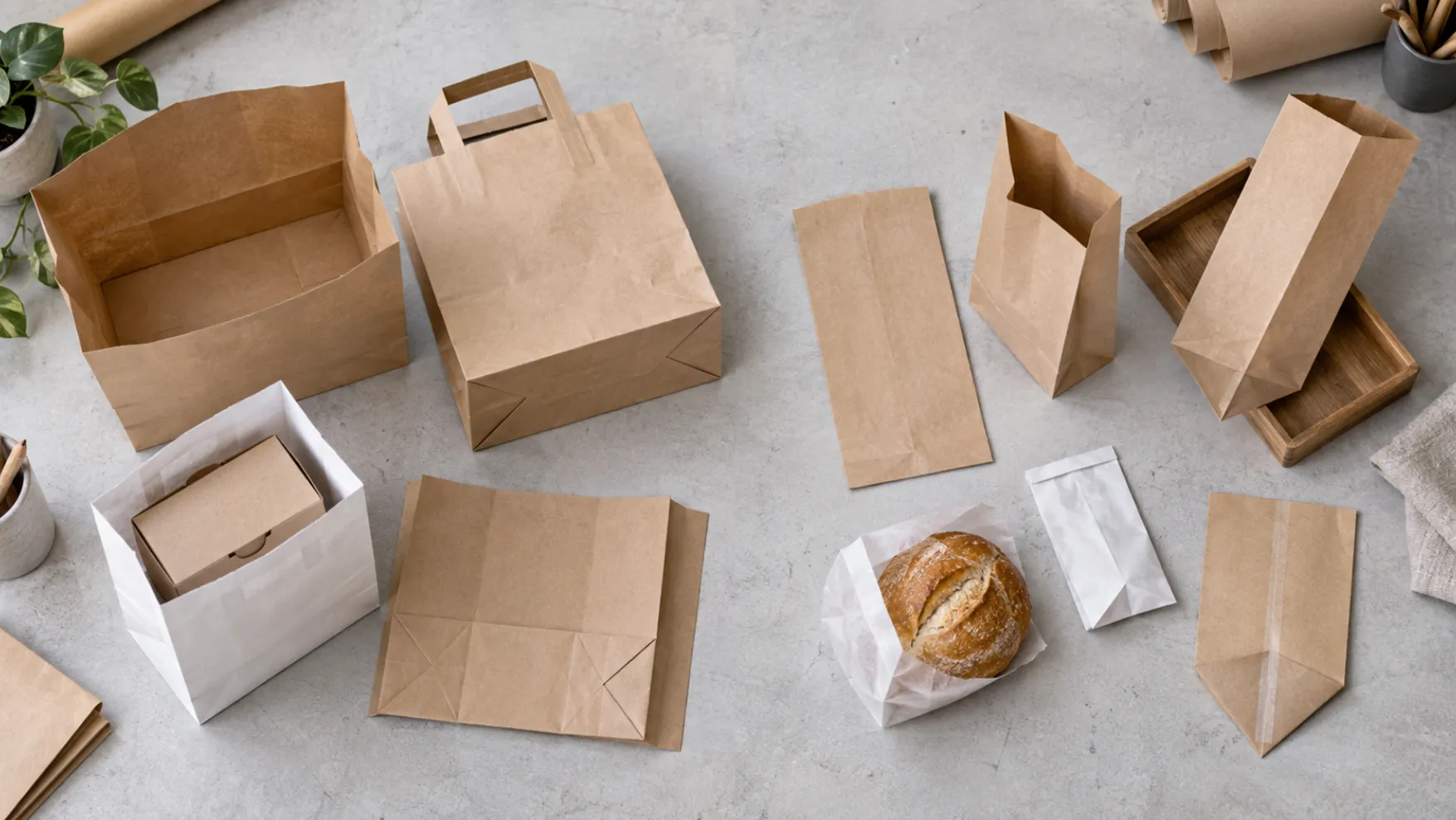
You may own a shop, a cafe, or a restaurant in India and have quite likely already experienced the heat, being inspected by the local authorities on which side of the shop the storeroom is, the suppliers changing their wrappings, and the customers demanding to know why their order came in a paper box rather than a plastic one. This isn't a passing phase. Plastic ban regulations: India has shifted from a disjointed system of enforcement to a truly serious compliance regime, and 2026 has been the year that has made it costly to ignore.
This is what actually changed, what will be considered as prohibited plastic packaging, what your business must replace it with, and the compliance information that most guides do not cover.
India banned the production, importation, storage, distribution, and sale of 19 single use plastic items characterized by low utility and high littering potential since July 2022:
Carry bags are given their own rule, and it's the rule that stumps the largest number of small businesses. In September 2021 and again in December 2022 (with no announcement), the plastic carry bag micron limit was increased to 75 and 120 microns, respectively, effectively rendering most of the thin polybags used by grocers, chemists, and street vendors out of commission. When your bags are so weak as to be torn by one good jerk, then they are almost certainly non-conforming.
The existing regulations did not come on a silver platter, and the awareness of the order will shed some light on why the enforcement continues to get stricter:
The Plastic Waste Management (Amendment) Rules, 2026, had pushed the registration of EPR plastic packaging as a concern of a large company into the domain of a small and mid-sized retailer, which now has to consider it as well. Extended Producer Responsibility (EPR) requires producers, importers, and brand owners to collect and recycle the plastic packaging they place on the market, including registering their facility on the CPCB portal and achieving required annual quotas on the amount of plastic packaging collected and, in certain categories, minimum recycled-content thresholds.
This is regardless of whether you produce anything or not. When your supplier is an EPR-enabled retailer or restaurant chain, and you place an order that requires custom-printed packaging, then they become your issue on the day an inspector demands documentation.
The floor, and not the ceiling, is the central list. Some states extended long before the national ban was there, and most have their own additions to it. The 2018 notification in Maharashtra limited plastic bags of any thickness and thermocol and even provided limitations on PET bottles. The 2019 ban of Tamil Nadu encompasses such items as plastic flags and packaging sachets and includes its own exemptions on the packaging of milk, curd, and medicine. Bihar has even banned carry bags of all thicknesses in its towns.
In practical terms, it will allow a retailer in Mumbai or Chennai to be fully consistent with the central rules and at the same time violate a local one. You might want to look directly at what your municipal corporation is saying instead of relying on the national list to think that you have the entire picture.
There was inconsistency in enforcement. It isn't anymore. State Pollution Control Boards are conducting more frequent inspections, and the penalty for using banned plastic in India is now on a broader scale than most business owners anticipate:
All this does not necessitate a factory-scale hurt. Only one audit of suppliers, which reveals non-conforming carry bags, can paralyze the deliveries of a small restaurant chain as rapidly as a large restaurant chain.
In the case of food-service businesses, the transition tends to be to an equivalent material-to-use case instead of selecting a single "eco" replacement for everything:
The single-use plastic substitutes are not necessarily cheaper, so it would be worth trying two or three suppliers before making the final move to the full-menu switch some compostable items do not work with oily or very hot food, and that is precisely the type of information that becomes noticeable when customers begin to complain.
Volume is a somewhat different issue with retailers. A general merchant or grocery store distributes much more packaging each day than most restaurants, which means that the replacement must be stable at scale:
It tends to be more predictable and sensible to deal with two or three suppliers that are already vetted and registered on EPR, rather than trying to find the cheapest bag in an online listing—the onus of finding out that you have been complying will be on you, not the supplier.
This is the aspect that most companies discover the hard way: the term "compostable" is not merely a marketing term used in India but a controlled statement. The only legal way a product can be called compostable is by testing to the IS/ISO 17088 standard and having the Central Pollution Control Board certify the product. Legally registered suppliers are able to present a CPCB registration number, and since mid-2025, they are able to present a scannable code that links to their compliance record.
Most of what we sell in the market as either biodegradable or eco-friendly has not undergone this process. Purchasing uncertified packaging based on its labeling is not going to help you during an inspection; that packaging will be counted as non-compliant even though it appears to be a responsible purchase. Typically, before changing suppliers, demand the certificate number and compare it to the published list of CPCB instead of accepting the packaging claims at face value.
Cogitating about how restaurants can switch from plastic packaging without an overnight crazy reorganization! The step-by-step plan is more effective than one day of the cutover:
Are PET bottles banned? Not within the overall single-use plastic ban—PET bottles are not in the 19-item list. They are subject to EPR collection requirements, and some states have imposed their requirements, so it is worth checking in your area whether you sell bottled beverages in bulk.
Can I use any plastic carry bags anymore? Yes, provided they pass the 120-micron limit (or they are certified compostable) and bear the necessary printed information on manufacturer registration and thickness.
My supplier claims to use biodegradable packaging—is that good enough? Request the certificate number of CPCB and verify. A promise on the label or a green leaf logo on the package is not the evidence of adherence per se.
The situation in the regulation of plastic in India does not stand still and tighten. Among the 2026 amendment regulations, increased enforcement of EPR, state-based additions to the central list, and more vigorous scrutiny of compostable claims mean that the retailers and restaurants that have made compliance a one-time formality are likely to be out of the step within a year. Those that are ahead of the next wave of changes are the businesses that develop sustainable packaging alternatives for retailers in their normal supplier auditing process, rather than rushing in after receiving a fine.
The regulations will continue to change. The key to staying off the inspector list at this moment is to get the basics right: compliant carry bags, verified and certified suppliers, and employees who actually know what is prohibited.
Tell us your size, GSM, quantity and other requirements. Our team will help you take the order from specification to dispatch.